What it holds. Brahman is Nārāyaṇa, a person with infinite auspicious qualities, and the souls and the world are real and eternal — but not independent. They are Brahman's body, as your body is yours: distinct from you, wholly dependent on you, incapable of existing a moment apart from you. So "non-dual" (advaita) is true, Sri Rāmānuja says, but only of a Brahman "qualified" (viśiṣṭa) by souls and world; hence the name. Liberation is not the disappearance of the soul into Brahman but its release from karma into an eternity of conscious service and love in Nārāyaṇa's presence, and the way there is surrender (prapatti) as much as knowledge. The tradition also gives scriptural authority to the Tamil hymns of the twelve Āḻvārs, poet-saints of the sixth to ninth centuries, alongside the Sanskrit Veda, and calls itself the Ubhaya-Vedānta, the Vedānta of both languages.
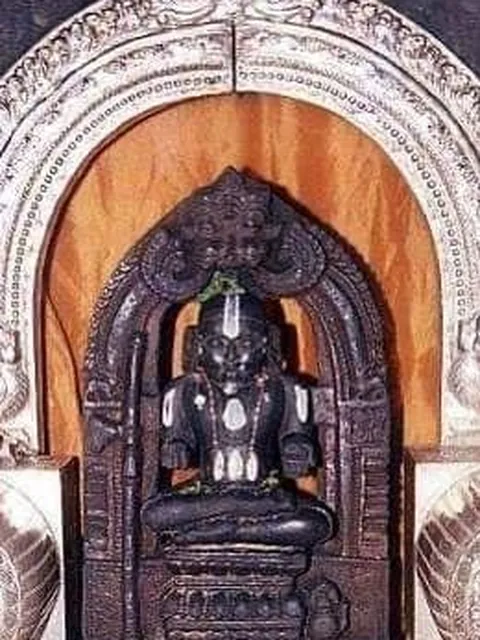
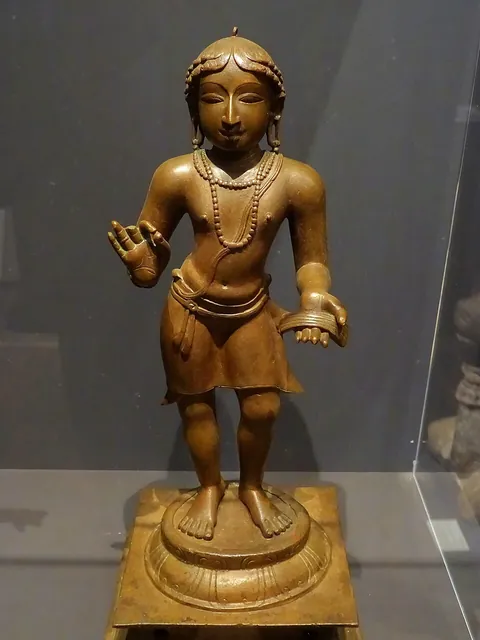
Sri Nāthamuni (ninth to tenth century) was born at Vīranārāyaṇapuram, now Kāṭṭumannārkōyil in the Cauvery delta of Tamil Nadu. The tradition credits him with recovering the four thousand verses of the Āḻvārs, which had been scattered and half-forgotten, arranging them as the Nālāyira Divya Prabandham and setting them to music for recital in temples — the act that made a Tamil devotional literature into scripture. He also wrote a Nyāya-tattva and a Yoga-rahasya, both now lost except in quotation.
Sri Yāmunācārya, called Āḻavandār, "he who came to rule", was Sri Nāthamuni's grandson, active in the tenth and early eleventh centuries at Srirangam. His name records a debate he won as a young man at the Pāṇḍya court in Madurai, but his lasting work is philosophical: the Siddhi-traya, three treatises establishing the reality of the individual soul, of God and of knowledge against the Advaitins and the Buddhists; the Āgama-prāmāṇya, defending the authority of the Pāñcarātra scriptures; the Gītārtha-saṅgraha, a summary of the Gītā that fixed the school's reading of it; and the Stotra-ratna, a hymn of surrender that Sri Rāmānuja knew by heart. The tradition says that he died at Srirangam before he could meet the young Rāmānuja, and that his hand was found with three fingers folded — three unfulfilled wishes, which his successor spent his life fulfilling.
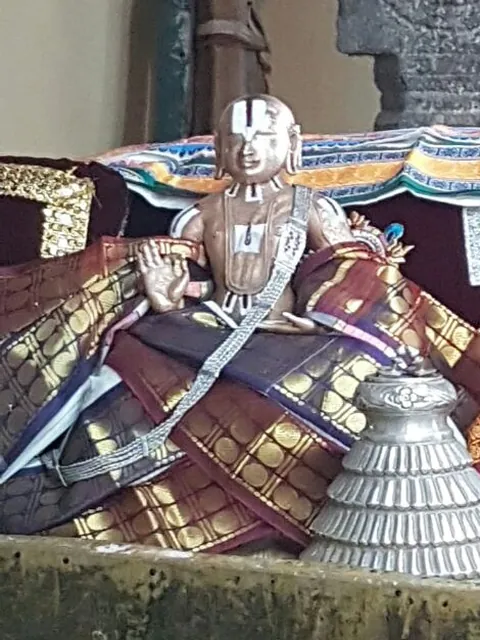
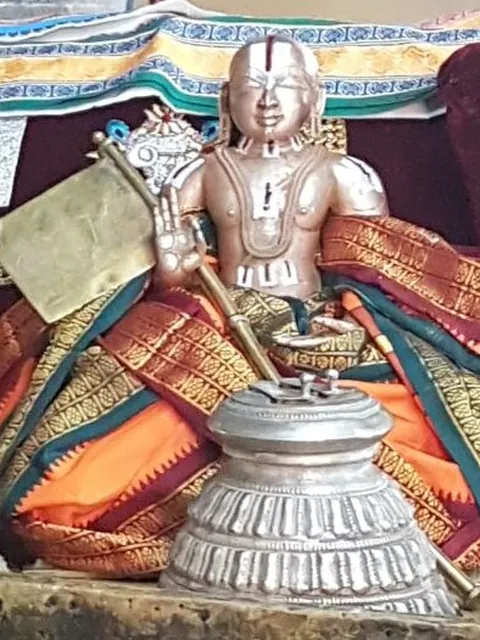
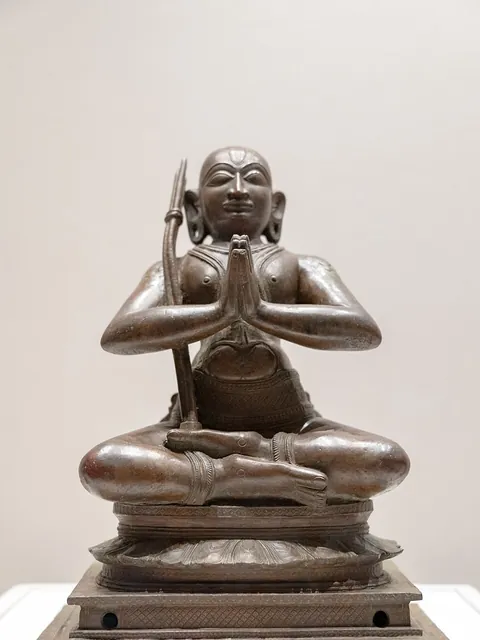
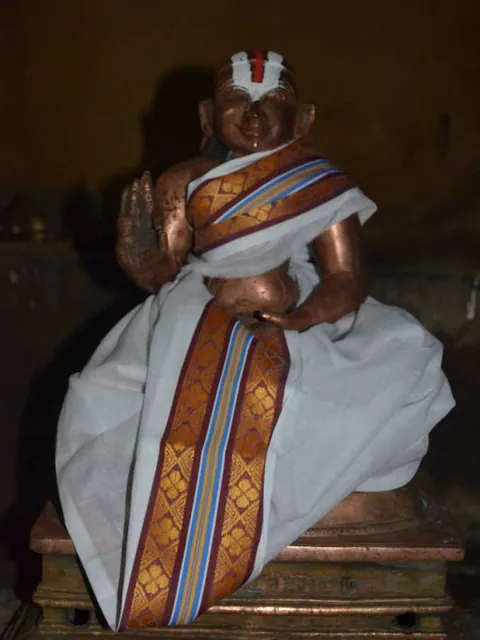
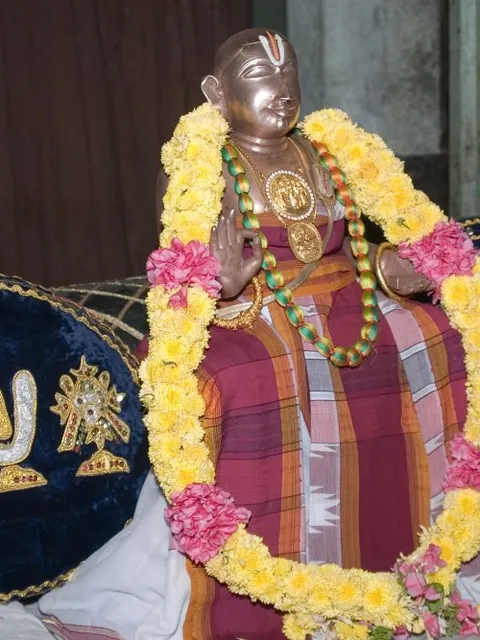
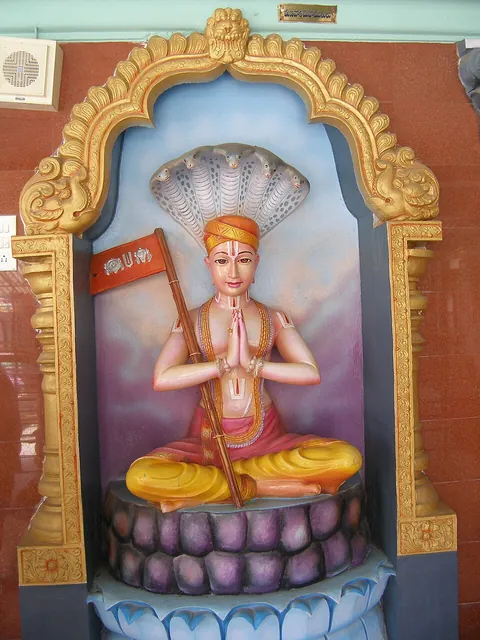
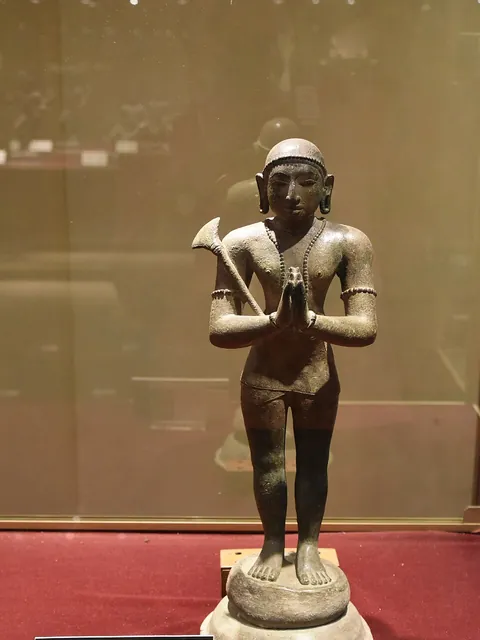
Sri Rāmānuja is the school's great teacher. He was born, by the tradition's reckoning, in 1017 at Śrīperumbūdūr near Kāñcīpuram in Tamil Nadu, to Āsūri Keśava Somayājī and Kāntimatī, and was named Lakṣmaṇa, or in Tamil Iḷaiya Perumāḷ. The Srirangam Andavan Ashramam's account gives the birth-star as Ārdrā in the month of Cittirai. He married young, moved to Kāñcīpuram and studied Vedānta under the Bhedābheda teacher Yādava Prakāśa — and broke with him, the tradition says, over the reading of a single Upaniṣadic sentence describing the eyes of the Lord: Yādava rendered "like the buttocks of a monkey" what Rāmānuja insisted meant "like a lotus opened by the sun". The story is remembered because it is the whole method in miniature: he would not let a grammatical possibility override the beauty and dignity of what the text was for.
After Yāmuna's death he received the tradition from five teachers in turn, of whom two matter most to the story. Periya Nambi initiated him at Madurāntakam, under a tree, in the rain, without waiting for the proper place — because, he said, the proper time was now. Tirukkōṭṭiyūr Nambi made him walk from Srirangam to Tirukkōṭṭiyūr eighteen times before consenting to teach him the secret meaning of the eight-syllable mantra, on condition of secrecy; and Rāmānuja, having learnt it, climbed the temple tower and taught it aloud to everyone who had gathered below. Asked whether he knew this meant hell for him, he is recorded as saying that it would be a small price if so many were saved. Whatever one makes of the account, the movement he led was in fact opened to people of every caste, and the temple town of Srirangam, whose administration he reorganised, became the school's capital.
The travels are extensive even by the standards of Indian teachers. He is said to have gone to Kashmir to consult the ancient commentary of Bodhāyana on the Brahma Sūtras — the tradition says the manuscript was taken from him on the way back and his disciple Kūratāḻvān recited it from memory — and, in a journey around the subcontinent, to have debated at Puri, Dvārakā, Badrinath and Kāśī. The most consequential journey was forced. In the early twelfth century the Coḷa king, a Śaiva, demanded that the Vaiṣṇava teachers of his kingdom sign a declaration of Śiva's supremacy; Kūratāḻvān and Periya Nambi went in Rāmānuja's place and were blinded, and Rāmānuja himself escaped west into the Hoysaḷa kingdom in what is now Karnataka. He lived about twelve years at Tirunārāyaṇapuram — Melkote, on its rock above the Cauvery plain — restored the temple there, and is said to have brought the Hoysaḷa king Biṭṭideva into the faith under the name Viṣṇuvardhana. He returned to Srirangam when the persecution ended and died there, aged one hundred and twenty by the tradition's count, in 1137. His body is preserved in the temple.
His nine works are the school's foundation: the Śrī Bhāṣya, the great commentary on the Brahma Sūtras, with two shorter commentaries on the same text, the Vedānta-dīpa and Vedānta-sāra; the Vedārtha-saṅgraha, his most original book, which sets out the whole system as a reading of the Upaniṣads before attacking Advaita, Bhedābheda and the doctrine of a Brahman without qualities; the Gītā-bhāṣya; the three prose hymns called the Gadya-traya, of which the Śaraṇāgati-gadya is the school's charter of surrender; and the Nitya-grantha, a manual of daily worship. What he made was not only a philosophy but an institution — the seventy-four teaching seats (siṁhāsanādhipatis) he is said to have appointed, the temple administration at Srirangam and Tirupati, the opening of the tradition to all.
Sri Piḷḷai Lokācārya, of Srirangam in the thirteenth and early fourteenth centuries, wrote eighteen "secret treatises" in the mixed Tamil-Sanskrit prose called Maṇipravāḷa, the greatest of them the Śrīvacana-bhūṣaṇa, "the jewel of good words", on the nature of grace and the disciple's utter dependence. He is the principal ācārya of the school's southern (Teṉkalai) branch, which holds that grace needs no cause on the soul's side — the cat carries the kitten; the kitten does nothing. The tradition remembers that when the Delhi armies fell on Srirangam in 1323, it was the aged Lokācārya who carried the processional image of the Lord south to safety, and that he died on the road at Jyotiṣkuḍi near Madurai.
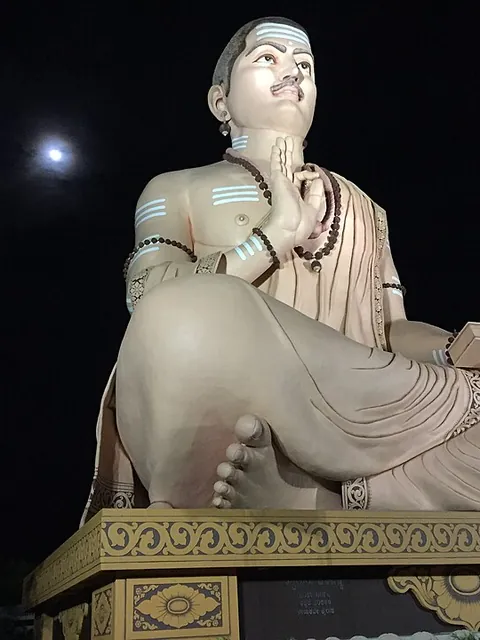
Sri Vedānta Deśika is the other great name. Born Veṅkaṭanātha at Tūppul, in Kāñcīpuram, in 1268, to Ananta Sūri and Totārambā, and taught from the age of seven by his maternal uncle Kiḍāmbi Appuḷḷār, he became the school's most formidable logician and its most prolific poet — over a hundred works in Sanskrit, Tamil, Prakrit and Maṇipravāḷa. Against Advaita he wrote the Śatadūṣaṇī, a hundred objections of which sixty-six survive; for his own school the Tattva-muktā-kalāpa, the Nyāya-siddhāñjana and the Nyāya-pariśuddhi, which give Viśiṣṭādvaita a complete epistemology and logic; for the ordinary devotee the Śrīmad Rahasya-traya-sāra, a long treatise in Maṇipravāḷa on the three secret mantras, which remains the school's standard manual of the path of surrender. He wrote the Pādukā-sahasra, a thousand verses on the Lord's sandals, in a single night, the tradition says, to win a poetry contest; an allegorical drama, the Saṅkalpa-sūryodaya; a Sanskrit epic on Kṛṣṇa, the Yādavābhyudaya; and a commentary on Sri Rāmānuja's Gītā-bhāṣya. He lived at Kāñcīpuram, Tirupati and Srirangam, and in 1323, when Srirangam was sacked, he hid among the dead, escaped with the commentary called Śruta-prakāśikā and the sons of its author, and lived in exile at Satyagālam in the Karnataka country for many years, returning to Srirangam in extreme old age when the image was restored. He is the principal ācārya of the northern (Vaḍakalai) branch, which holds that grace, though free, responds to the soul's turning — the monkey's infant clings to the mother. He died, by the tradition's reckoning, in 1369.
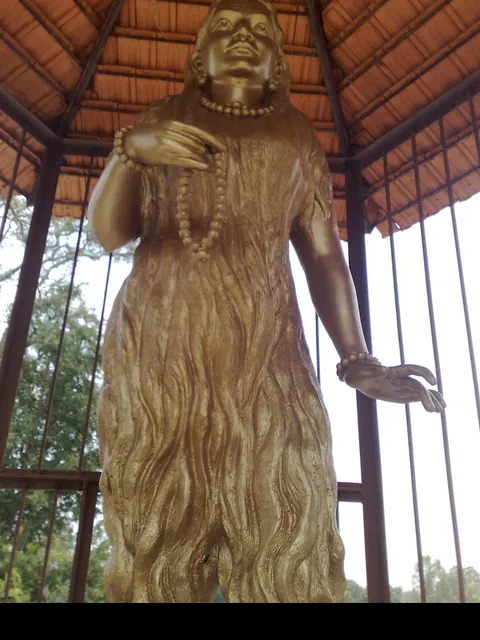
Sri Maṇavāḷa Māmunigaḷ (1370–1443), born at Āḻvār Tirunagari in the far south and settled at Srirangam, is the last of the great Teṉkalai ācāryas: a commentator on Piḷḷai Lokācārya, on the Āḻvārs and on the Tiruvāymoḻi, and the organiser of the branch's teaching lineage into eight seats. The Vaḍakalai branch's institutions include the Ahobila Maṭha, founded around 1398 by Sri Ādivaṉ Śaṭhakōpa Jīyar, and the Parakāla Maṭha of Mysore; the Śrīvaiṣṇava temples of Srirangam, Tirupati, Kāñcīpuram and Melkote remain the school's living centres, and its teachers are still active on every continent.