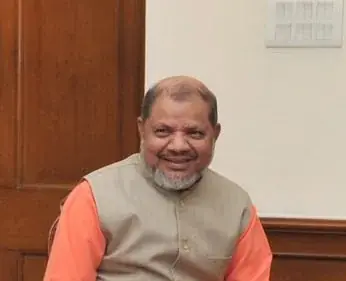
Swami Tejomayananda
Head of Chinmaya Mission, 1993–2017
b. 1950 · The Chinmaya Lineage
- When
- Born 30 June 1950
- Born
- Madhya Pradesh, India
- Where the life was lived
- Born Sudhakar Kaitwade in Madhya Pradesh; a science postgraduate at Indore; joined the Vedanta course at Sandeepany Sadhanalaya in Mumbai at twenty and graduated in 1975; led Chinmaya Mission's work at San Jose in California, then returned to India in 1993.
- What is left of it
- Over fifty titles, including commentaries on Tattva Bodha, Upadeśa Sāra and the Pañcadaśī, and his talks on the Rāmāyaṇa and the Bhāgavata.
Headed Chinmaya Mission Worldwide from 1993, wrote the plain-language commentaries many beginners start from, and founded the gurukula for Indian performing arts at Chinmaya Vibhooti.
The full-length study of this teacher is still being written. What is below is the complete short life, and it is accurate as far as it goes.
The life
He was born Sudhakar Kaitwade in Madhya Pradesh on 30 June 1950 and was a postgraduate science student at Indore — and he was drawn, from early on, to devotional music and to the Bhāgavata, which is not where most science postgraduates end up. He joined the Vedānta course at Sandeepany Sadhanalaya in Mumbai at twenty and graduated in 1975. He led Chinmaya Mission's work at San Jose in California, returned to India in 1993, and headed Chinmaya Mission Worldwide from then until 2017. What he is loved for is a particular refusal. There is a tendency, once a student has grasped that reality is non-dual, to become embarrassed about devotion — to treat singing to Rāma as a stage one has left behind. He would not have it. His talks on the Rāmāyaṇa and the Bhāgavata sit beside commentaries on Tattva Bodha, Upadeśa Sāra and the Pañcadaśī in the same body of work, by the same person, with no apology and no seam. More than fifty titles, many of them the plain-language commentaries beginners start from. He founded the gurukula for Indian performing arts at Chinmaya Vibhooti, which is of a piece with all of it. The point he makes with his life is a technical one about this path: the heart and the argument are not two faculties to be traded off, and a teaching that dries out the first has usually misunderstood the second.
The turn it rests on
He showed that rigorous non-duality and unembarrassed devotion are one practice.
What was taught
Carried the Mission for a quarter-century, teaching with devotional warmth and simplicity.
Read the originals
Primary texts and the records kept by the teacher's own institution.
Every daily message names the teacher it came from. Read the messages, or see the whole line this teacher stands in: all fifty-one teachers.