Maṇḍana Miśra
Author of the Brahma-siddhi
c. 8th century CE · The Shankara Lineage
- When
- Eighth century, in Śaṅkara's own lifetime
- Born
- Northern India; the tradition places his household in Mithilā, in present-day Bihar
- Where the life was lived
- Northern India. The traditional accounts place his home in Mithilā and the famous debate with Śaṅkara at his own house, with his wife as the judge.
- What is left of it
- The Brahma-siddhi, in four chapters — one of the four siddhi works of classical Advaita.
Made the case for non-duality in the technical language of the ritualists, so that the argument could not be dismissed as the enthusiasm of outsiders.
The full-length study of this teacher is still being written. What is below is the complete short life, and it is accurate as far as it goes.
The life
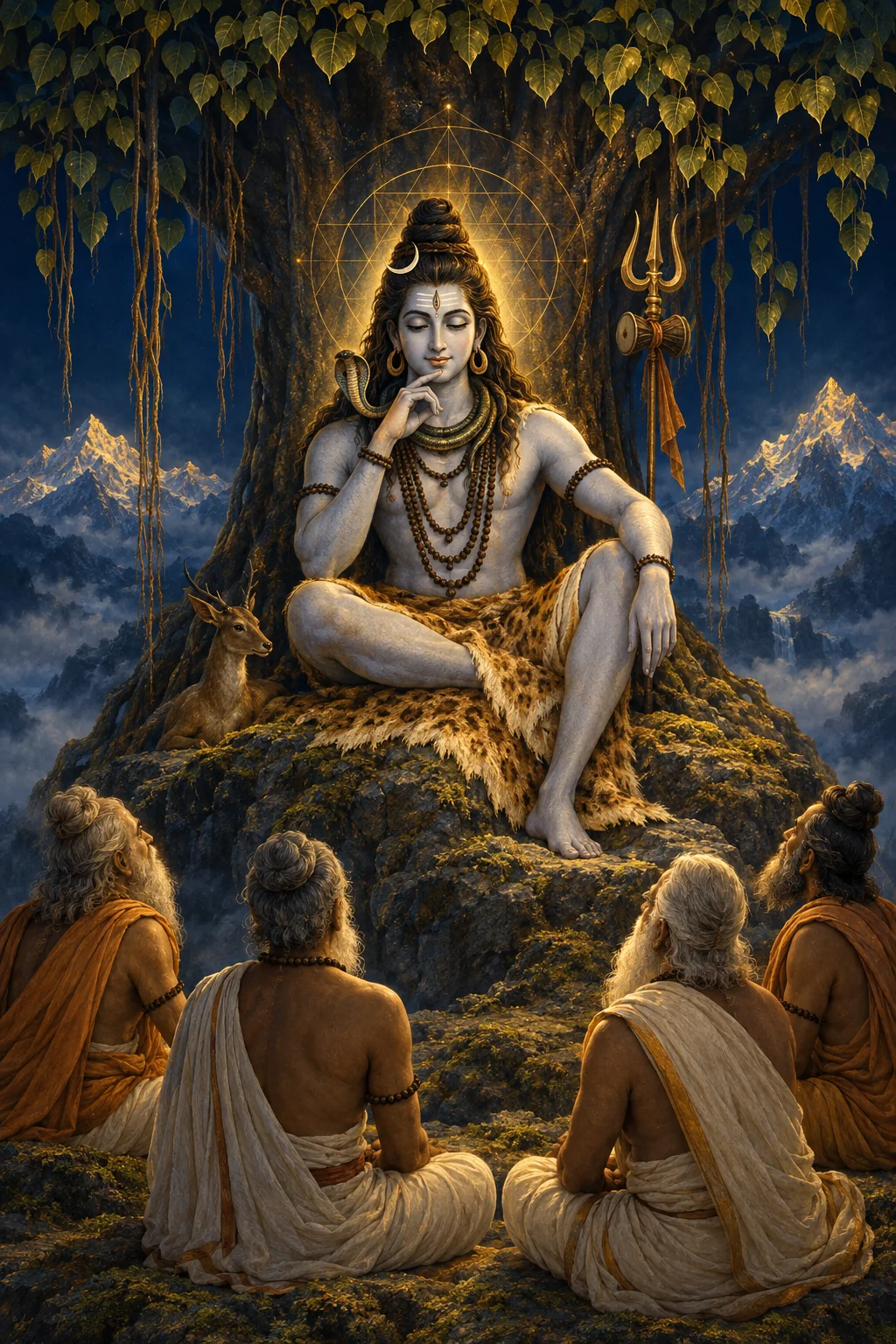
He is the one figure in the early Advaita story who begins on the other side of the table. His world was Mīmāṃsā, the exacting philosophy of Vedic ritual, which held that the Veda's authority lies in what it tells you to do; a text that merely announces what is already the case looked, from inside that discipline, like a text with no work to perform. The traditional accounts place his household in Mithilā, in the plain south of the Himalaya in what is now Bihar, and tell of a debate there lasting many days, with his wife appointed to judge it — an arrangement the accounts report without embarrassment. As those accounts have it, the debate ended with the householder taking sannyāsa from the younger monk. What can be checked is the book. The Brahma-siddhi argues for non-duality in the ritualists' own technical vocabulary, and the later tradition treats it as settled reading: the Advaita lists name it with the Naiṣkarmya-siddhi, the Iṣṭa-siddhi and the Advaita-siddhi as the four siddhi works. The tradition also identifies him with Sureśvara, Śaṅkara's disciple; modern editors are divided, and the honest position is that the identification is traditional rather than demonstrated. His dates and the details of his life are not recorded. What the lineage kept was the argument — which is, given the man, probably what he would have chosen.
The turn it rests on
The tradition tells of a long debate with Śaṅkara that ended with the householder scholar accepting sannyāsa; the Advaita lists count the Brahma-siddhi among the four siddhi works, beside the Naiṣkarmya-siddhi, the Iṣṭa-siddhi and the Advaita-siddhi.
What was taught
Argued the case for non-duality from the side of Vedic ritual philosophy, and left the Brahma-siddhi — one of the four classical 'siddhi' works the tradition keeps quoting.
Read the originals
Primary texts and the records kept by the teacher's own institution.
Every daily message names the teacher it came from. Read the messages, or see the whole line this teacher stands in: all fifty-one teachers.