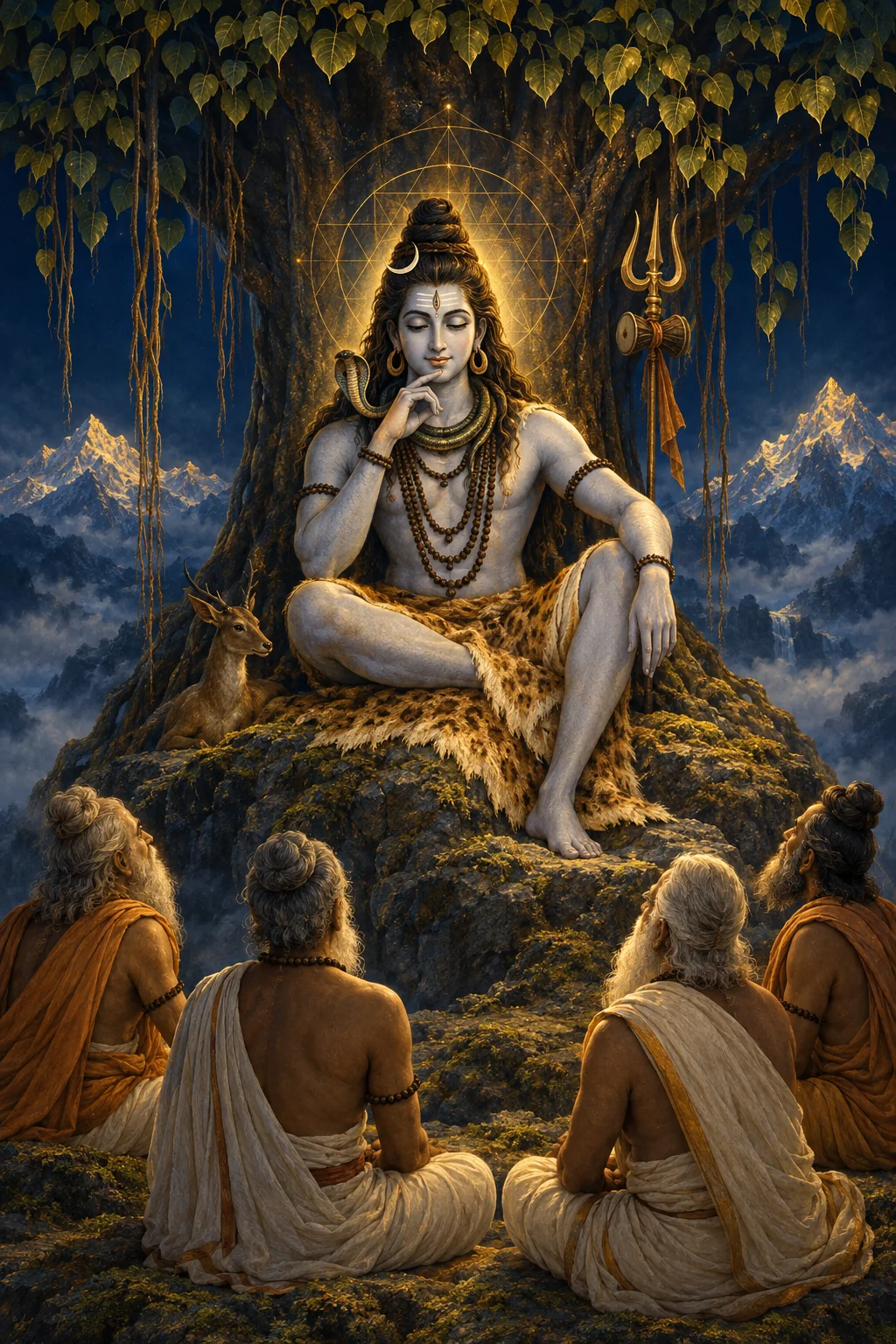
Sureśvarāchārya
Direct disciple of Adi Shankara
8th century CE · The Shankara Lineage
- When
- Eighth century
- Born
- South India
- Where the life was lived
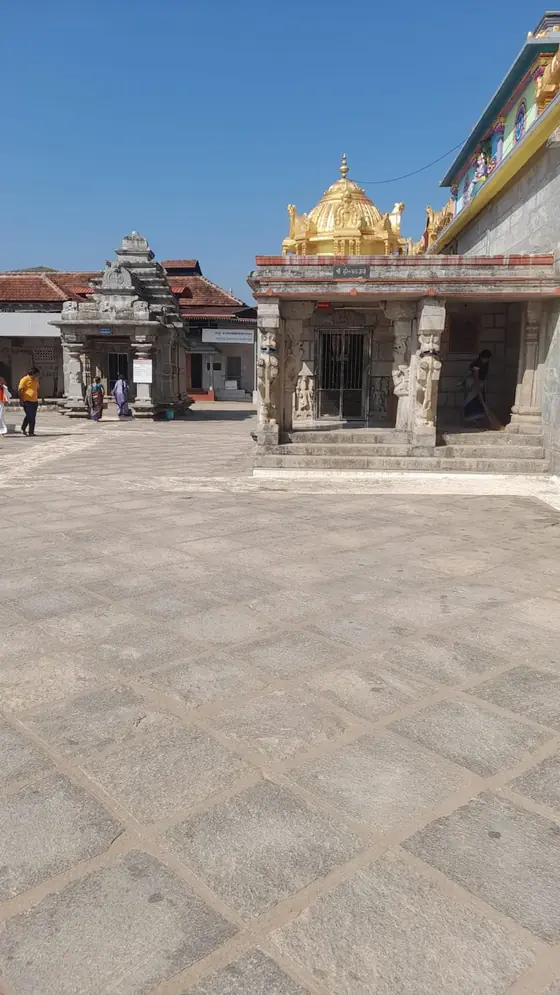
- Born Viśvarūpa, a householder scholar of Māhiṣmatī in the Magadha country; after the debate he travelled the subcontinent with Śaṅkara and was installed at Śṛṅgeri in Karnataka.
- What is left of it
- Vārtikas — metrical commentaries on Śaṅkara's readings of the Taittirīya and Bṛhadāraṇyaka Upaniṣads — the Manasollāsa Vārtika, and the Naiṣkarmya Siddhi.
Lost a formal debate to Śaṅkara on the value of ritual action, kept his word, took monastic vows, and became the first head of the Śṛṅgeri Śāradā Pīṭham and one of the tradition's most rigorous writers.
The full-length study of this teacher is still being written. What is below is the complete short life, and it is accurate as far as it goes.
The life
He begins as the opposition, and the tradition never hides it. Before sannyāsa he was Viśvarūpa, a householder scholar of Māhiṣmatī in the Magadha country, working within the ritual philosophy that held the Veda's authority to lie in its injunctions — what to do, when, with which words. Against that, a young monk arguing that liberation comes from knowledge and that no action can produce it was not a mild disagreement but an attack on the discipline's foundations. The traditional accounts describe a formal debate of many days at his own household, with his wife Ubhaya Bhāratī appointed to judge it — a detail the accounts report matter-of-factly. He lost, and he kept his word: he took monastic vows, travelled the subcontinent with his former opponent, and was installed at Śṛṅgeri, in the Karnataka hills above the Tuṅga, as the first head of that seat. Then he wrote, and the writing is fierce. His Naiṣkarmya Siddhi presses one point with almost mathematical insistence: action alters what you have, and the problem is what you are taking yourself to be — so no quantity of action, however pure, can reach it. His metrical commentaries on Śaṅkara's readings of the Taittirīya and Bṛhadāraṇyaka Upaniṣads are among the most demanding works in the tradition. The tradition identifies him with Maṇḍana Miśra, author of the Brahma-siddhi; modern editors are divided on it. What is not in doubt is the shape of the life: a man who argued as hard as he could, lost honestly, and then spent his remaining years making the winning argument stronger.
The turn it rests on
A defeated opponent became the first head of the Sringeri seat.
What was taught
Formerly the ritualist Maṇḍana Miśra; after debate he became Shankara's disciple and first head of the Sringeri seat.
Read the originals
Primary texts and the records kept by the teacher's own institution.
Every daily message names the teacher it came from. Read the messages, or see the whole line this teacher stands in: all fifty-one teachers.