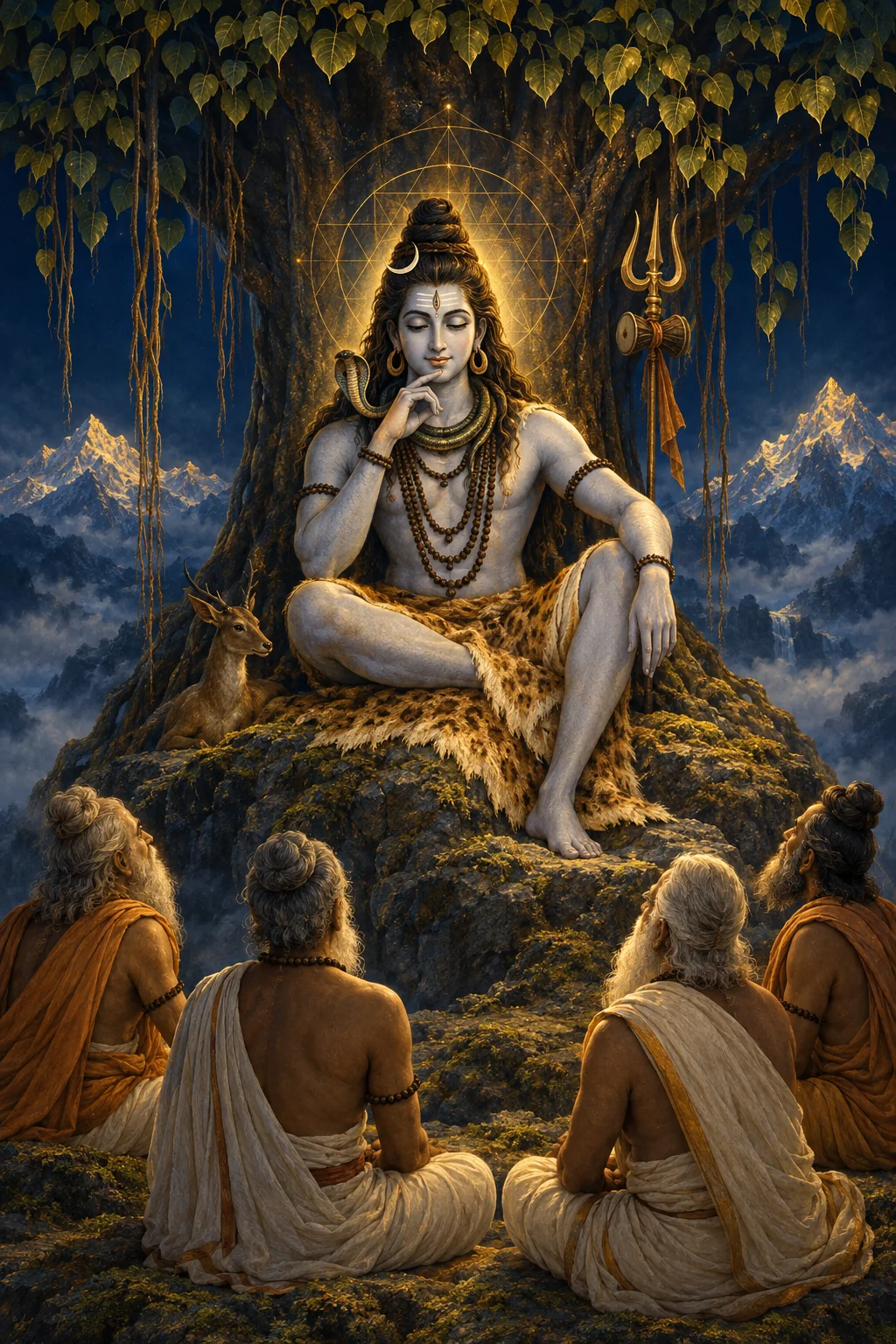
Sarvajñātman
Author of the Saṃkṣepaśārīraka
c. 10th–11th century CE · The Shankara Lineage
- When
- Tenth to eleventh century
- Born
- India; his region is not recorded
- Where the life was lived
- Not recorded.
- What is left of it
- The Saṃkṣepaśārīraka, a verse compendium of the Advaita reading of the Upaniṣads, critically edited and translated by N. Veezhinathan in 1972.
Gave the tradition a portable version of its own argument, in metre, for students who would never own a manuscript.
The full-length study of this teacher is still being written. What is below is the complete short life, and it is accurate as far as it goes.
The life
Consider the problem he was solving. The reasoning of Advaita, by his century, was spread across long prose commentaries that existed as palm-leaf manuscripts in a handful of places, copied by hand, eaten by insects, lost in fires. A student who wanted the argument had to sit where the manuscript was and be taught from it. His answer was verse. The Saṃkṣepaśārīraka — the title means something like the abridged body of the teaching — puts the substance of the Upaniṣadic reasoning into metre, which is how India had carried its most precious material for two thousand years already. Metre resists corruption: a line that has lost a syllable announces itself. Verse can be learnt by a student who owns nothing. The work entered the syllabus and stayed there, read after the introductory manuals and before the great commentaries, and it was still being edited critically in the twentieth century — N. Veezhinathan's edition with English translation appeared in 1972, which is one way of measuring how alive the text remained. Of the man, the tradition records a name and a century or two. It is a recurring pattern in this lineage, and worth noticing rather than apologising for: the people who built it were not interested in being remembered, and arranged their work so that it would not need them.
The turn it rests on
Putting the argument in metre was a decision about transmission: verse survives where manuscripts perish.
What was taught
Compressed the whole Advaita reading of the Upaniṣads into verse, so that a student could carry the argument in memory rather than in a library.
Read the originals
Primary texts and the records kept by the teacher's own institution.
Every daily message names the teacher it came from. Read the messages, or see the whole line this teacher stands in: all fifty-one teachers.