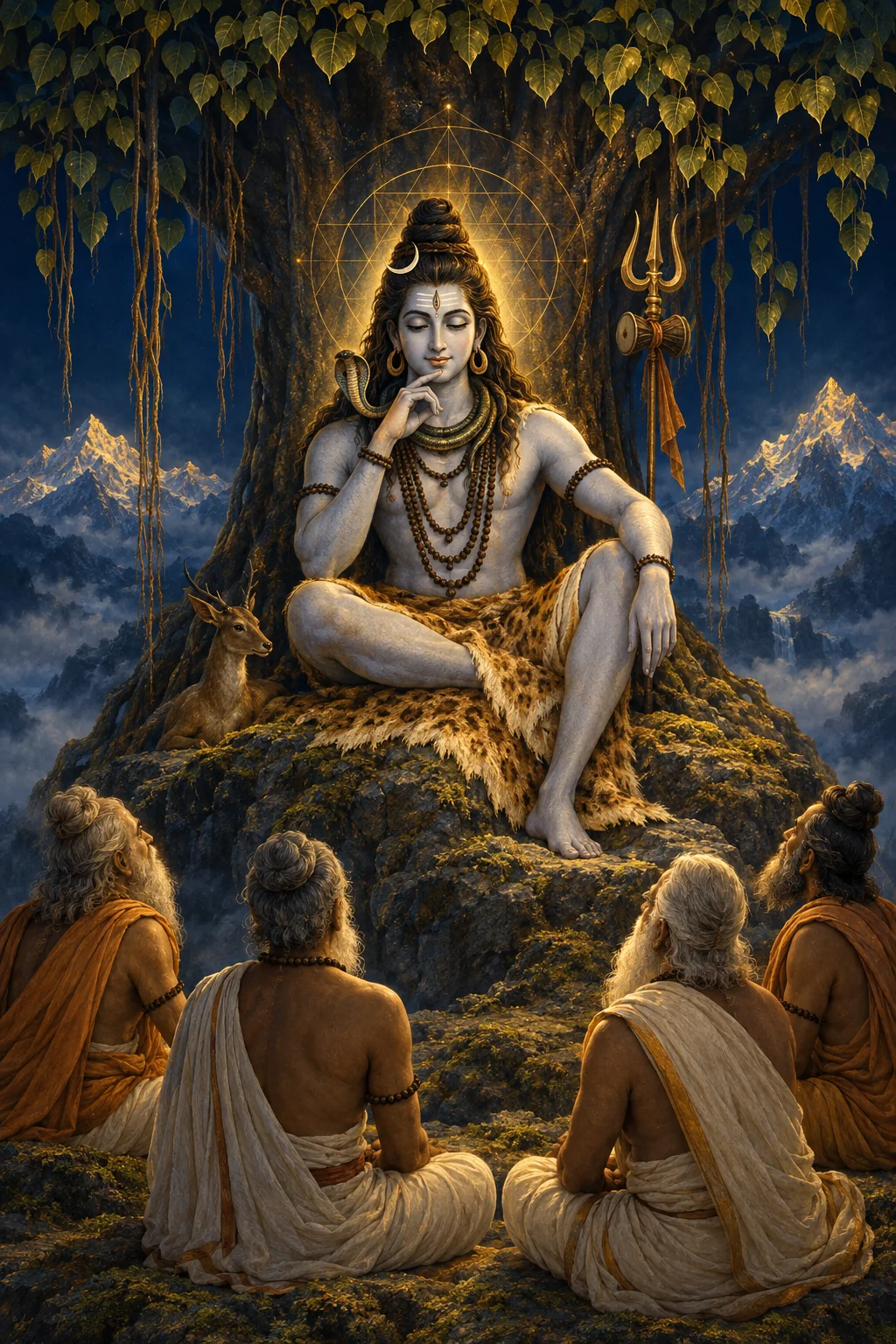
Sadāśiva Brahmendra
Avadhūta and composer
c. 17th–18th century CE · The Shankara Lineage
- When
- Seventeenth to eighteenth century
- Born
- Tamil country, near Thiruvenkadu
- Where the life was lived
- The Tamil country, near Thiruvenkadu; a wandering monk who kept no fixed residence and often no speech.
- What is left of it
- Sanskrit hymns and short Advaita verses, including the well-known Ātma Vidyā Vilāsa.
Remembered in the lineage's own record of its preceptors as a man who lived what the texts describe — silent, without possessions, and entirely indifferent to how he was received.
The full-length study of this teacher is still being written. What is below is the complete short life, and it is accurate as far as it goes.
The life
He was a disciple of Paramaśivendra Sarasvatī, in the Tamil country near Thiruvenkadu, in the seventeenth or eighteenth century — the era of the Maratha court at Thanjavur, of temple festivals and Carnatic music in full flower. And he walked away from all of it, keeping a vow of silence, owning nothing, often not even clothing, wandering the Kāverī delta as an avadhūta. The stories told of him are physical. Villagers found him buried in a sandbank where he had sat in absorption and the river had shifted over him, and he was unharmed and unconcerned. He was beaten, abused and honoured with equal indifference. The tradition's own record of its preceptors keeps him precisely because he is unembarrassing to it in a way that only someone who has stopped negotiating can be. Here is the paradox worth sitting with: the silent man is why he is still heard. He left Sanskrit songs — the Ātma Vidyā Vilāsa and short verses — several of them about the pointlessness of looking for happiness outside, and they entered the Carnatic repertoire and are sung in concert halls today, in Chennai and Cleveland and London, by people who may know nothing of Advaita. He stopped explaining and started singing, and the singing went further than the explanations of far more famous men.
The turn it rests on
He stopped explaining and started singing.
What was taught
Lived in complete renunciation and left Sanskrit songs of non-duality still sung today.
Read the originals
Primary texts and the records kept by the teacher's own institution.
Every daily message names the teacher it came from. Read the messages, or see the whole line this teacher stands in: all fifty-one teachers.