Muruganar
Poet of Ramana's teaching
1890–1973 · The Ramana Lineage
- When
- 1890–1973
- Born
- Ramanathapuram, Tamil Nadu
- Where the life was lived
- Born at Ramanathapuram in Tamil Nadu; a Tamil scholar and poet who spent the rest of his life at Tiruvannamalai.
- What is left of it
- Guru Vācaka Kōvai; Śrī Ramaṇa Sannidhi Murai; the notebooks published as Padamalai.
Recorded Ramana's teaching in Tamil verse of high literary standing, and prompted the Upadeśa Undiyār by asking his teacher to put the essentials into verse.
The full-length study of this teacher is still being written. What is below is the complete short life, and it is accurate as far as it goes.
The life
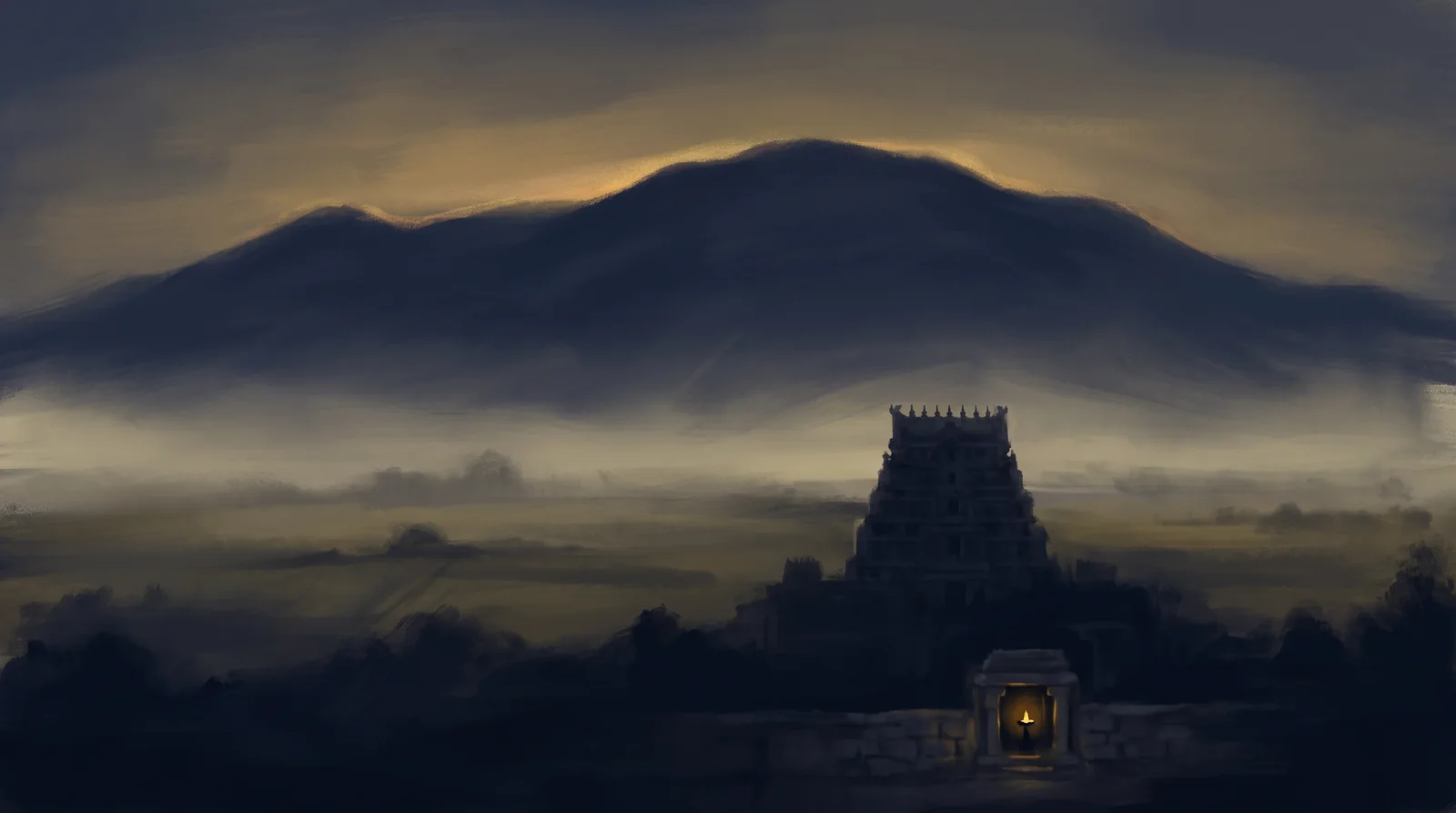
He was born in 1890 at Ramanathapuram in Tamil Nadu and became a Tamil scholar and poet formed by the Śaiva devotional canon — the hymns of the Tamil saints, a literature of extraordinary technical difficulty and emotional force. He arrived at Tiruvannamalai in his thirties, saw Ramana, and by his own account recognised immediately what his tradition's poetry had been describing. He stayed for the rest of his life, in poverty, and wrote thousands of verses: Śrī Ramaṇa Sannidhi Murai, modelled on the classical Tamil devotional forms; Guru Vācaka Kōvai, 1,254 verses recording his teacher's spoken teaching; and the notebook verses later published as Padamalai. But his most consequential act was to ask. Ramana wrote almost nothing on his own initiative. Both of the central Tamil poems — Ulladu Nāṟpadu, the Forty Verses on Reality, and Upadeśa Undiyār — exist because this poet requested them, in one case asking his teacher to put the essentials of the teaching into verse so that they could be sung. So the situation is this: the tradition's two core texts were drawn out of a silent man by a devotee who kept asking, and were preserved in a metre demanding enough that later scholars needed prose versions to study them. He died in 1973, having spent fifty years within sight of one hill.
The turn it rests on
The tradition owes its two central poems to a devotee who kept asking.
What was taught
His Tamil verses preserve much of what Ramana actually said; he prompted the composition of Upadeśa Undiyār.
Read the originals
Primary texts and the records kept by the teacher's own institution.
Every daily message names the teacher it came from. Read the messages, or see the whole line this teacher stands in: all fifty-one teachers.