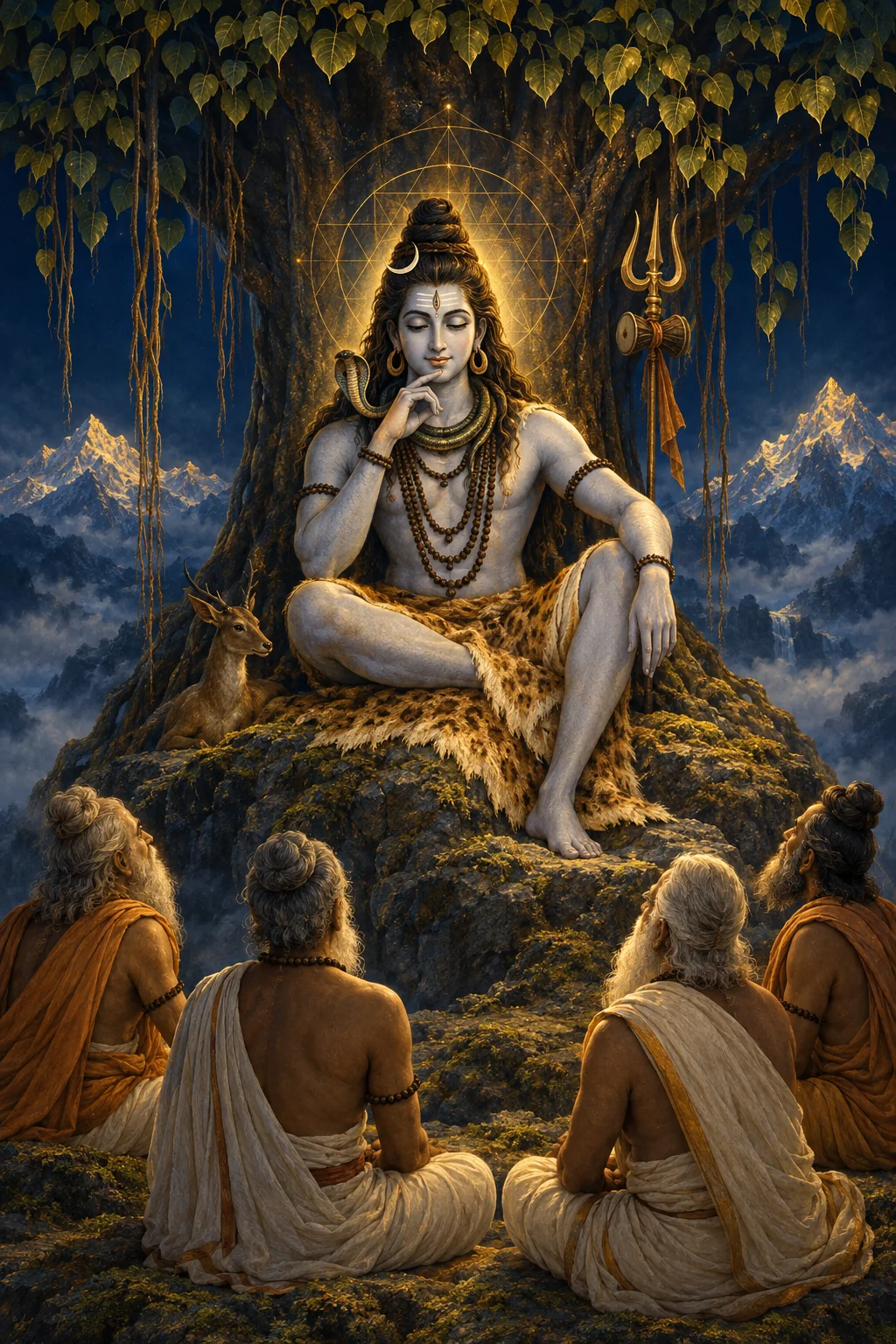
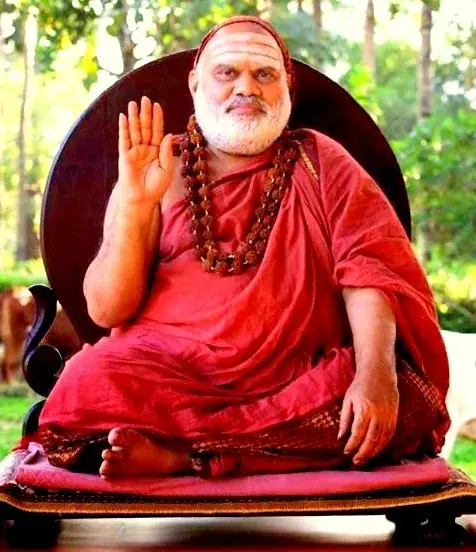
Bhāratī Tīrtha
36th Jagadguru of Sringeri
b. 1951 · The Shankara Lineage
- When
- Born 1951
- Born
- Machilipatnam, Andhra Pradesh
- Where the life was lived
- Born at Alugumallepadu, a village in the Palnadu area of Guntur district, Andhra Pradesh, on the banks of the Nāguleru; met his teacher at Ujjain in 1966 and has lived at Śṛṅgeri in Karnataka since, on the Tunga river.
- What is left of it
- Discourses, and his annual addresses and scriptural expositions published by the Peetham.
Became a disciple at fifteen in 1966, took monastic vows in 1974, and as the present Jagadguru maintains the Peetham's Veda schools, hospitals and scholarly assemblies.
The full-length study of this teacher is still being written. What is below is the complete short life, and it is accurate as far as it goes.
The life
He was born in 1951 at Alugumallepadu, a village in the Palnadu country of Guntur district in Andhra Pradesh, on the banks of the Nāguleru — flat, hot, dry-farmed land, a long way from anywhere famous. He met his teacher at Ujjain, on the Kṣiprā in central India, in 1966, when he was fifteen. He took monastic vows in 1974 and has been the thirty-sixth Jagadguru of the Śṛṅgeri Śāradā Pīṭham since 1989. So the chain reaches the present day and is still moving. The maṭha traces its line of teachers back through the thirty-five predecessors to Śaṅkara himself, and whatever one concludes about the earliest links, the later ones are documented in the seat's own registers, and the daily worship, the Veda schools, the scriptural assemblies and the public discourses have continued without a break through empires, famines and two centuries of colonial rule. He lives at Śṛṅgeri on the Tuṅga in the Karnataka hills, maintains the Pīṭham's Veda schools, its hospital and its scholarly gatherings, and gives expositions of the texts every year. The reason he belongs on this page is simple. Everything else here is history; he is the same thing happening now. A student who wants to know what this tradition looks like when it is not being described retrospectively can go and stand in the courtyard at Śṛṅgeri on any ordinary morning.
The turn it rests on
The living end of the oldest continuous Advaita chain of transmission.
What was taught
The present holder of the Sringeri seat, in a succession traced unbroken to Adi Shankara.
Read the originals
Primary texts and the records kept by the teacher's own institution.
Every daily message names the teacher it came from. Read the messages, or see the whole line this teacher stands in: all fifty-one teachers.